
Extending the season, enhancing design and reducing waste
Drying flowers is one of the simplest ways to work more seasonally and more sustainably. At Stem + Stem, we dry stems to extend the life of the season, build depth and texture into our designs, and reduce waste by using plants well beyond their short window in bloom.
Rather than treating dried flowers as decorative or nostalgic, we see them as a continuation of the growing cycle. Drying allows summer to stretch into autumn, and autumn into winter — keeping structure, movement and interest in our work long after the garden has changed.
It’s also how people have always worked with plants. Long before modern floristry, stems were dried so they could be transported, studied and shared. Today, the motivation is different, but the principle is the same: slow down, pay attention, and make the most of what’s available.
Air Drying Flowers
Our primary method
Air drying is the method we use most. It’s simple, low-impact and well suited to many British-grown flowers and foliage.
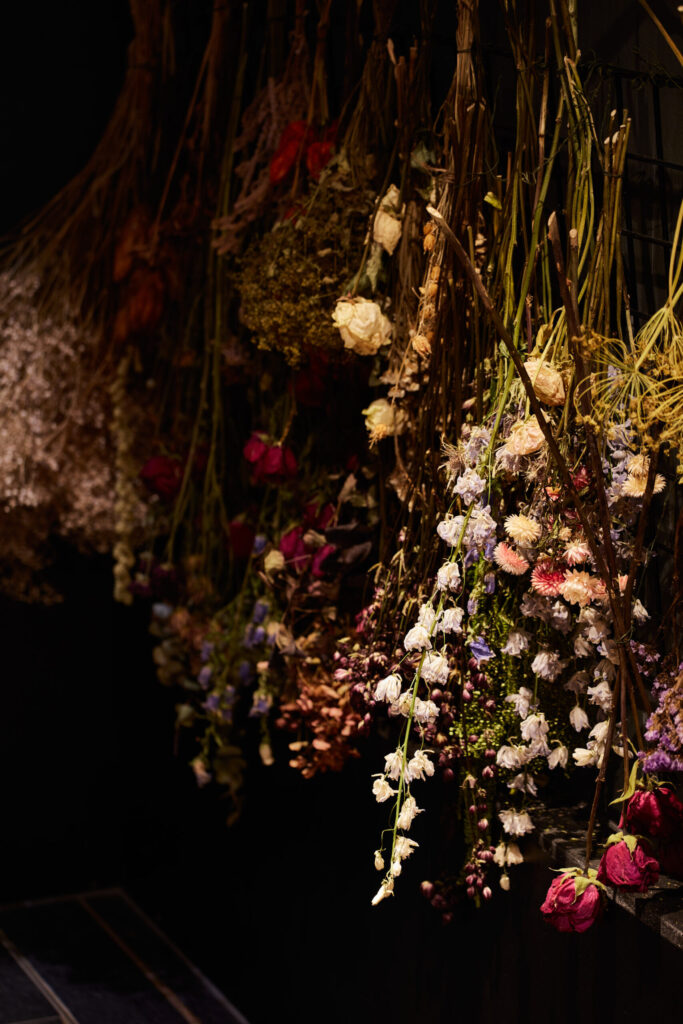
Stems are tied in small bunches and hung upside down, allowing moisture to leave the plant naturally. We dry on open racks in a warm, dark, well-ventilated space, which helps flowers dry steadily without losing their form. A darker environment generally preserves colour better, but it’s not the only approach.
Drying in Sunlight
Drying in a hot shed or outbuilding with direct sunlight creates a natural bleaching effect. Greens soften, whites lift, and some stems take on a pale, chalky tone. This works particularly well for structural flowers such as bells of Ireland, where shape matters more than strong colour.
Air drying suits flowers with low moisture content, papery bracts, seed heads and grasses. Drying times vary — from a week to several months — depending on the stem and the conditions.
Drying Flowers in Water
Drying in water is best thought of as letting flowers finish naturally. Stems are placed in a vase with just a small amount of water and left somewhere warm. As the water slowly evaporates, the flower dries in place.
- The water should not be topped up — gradual dehydration is the aim. This method works particularly well for hydrangea and bells of Ireland, helping them retain their shape while softening in colour and texture.
Desiccants & Glycerine
We occasionally use desiccants when preserving fine detail is essential, though the results are delicate and best handled with care.
Glycerine is used only for foliage. It replaces the plant’s natural moisture, keeping leaves supple and leathery rather than brittle. Colour deepens over time, making it ideal for structural greenery used in longer-lasting arrangements.
Why Dry Flowers at All?
Drying flowers allows us to:
-
extend the season
-
reduce waste
-
design with more texture and structure
-
work more sustainably
Preserving flowers isn’t about stopping time. It’s about letting plants change — and designing with that change in mind.
Like cooking or wine, it rewards patience, restraint and an understanding of when something is at its best.
Our Favourite Flowers to Dry
Allium, astilbe, sweet rocket, marigold, achillea, lady’s mantle, chive, hollyhock, cornflower, eucalyptus, echinops, carrot flower, old man’s beard, teasel, heather, beech, hydrangea, statice, larkspur and delphinium, lavender, strawflower, iris, ox-eye daisy, limonium (common flax), bells of Ireland, honesty, rudbeckia and sunflower.